

Resistance, and the Legacy of Mary L. Johnson in the Chicago Police Torture Era
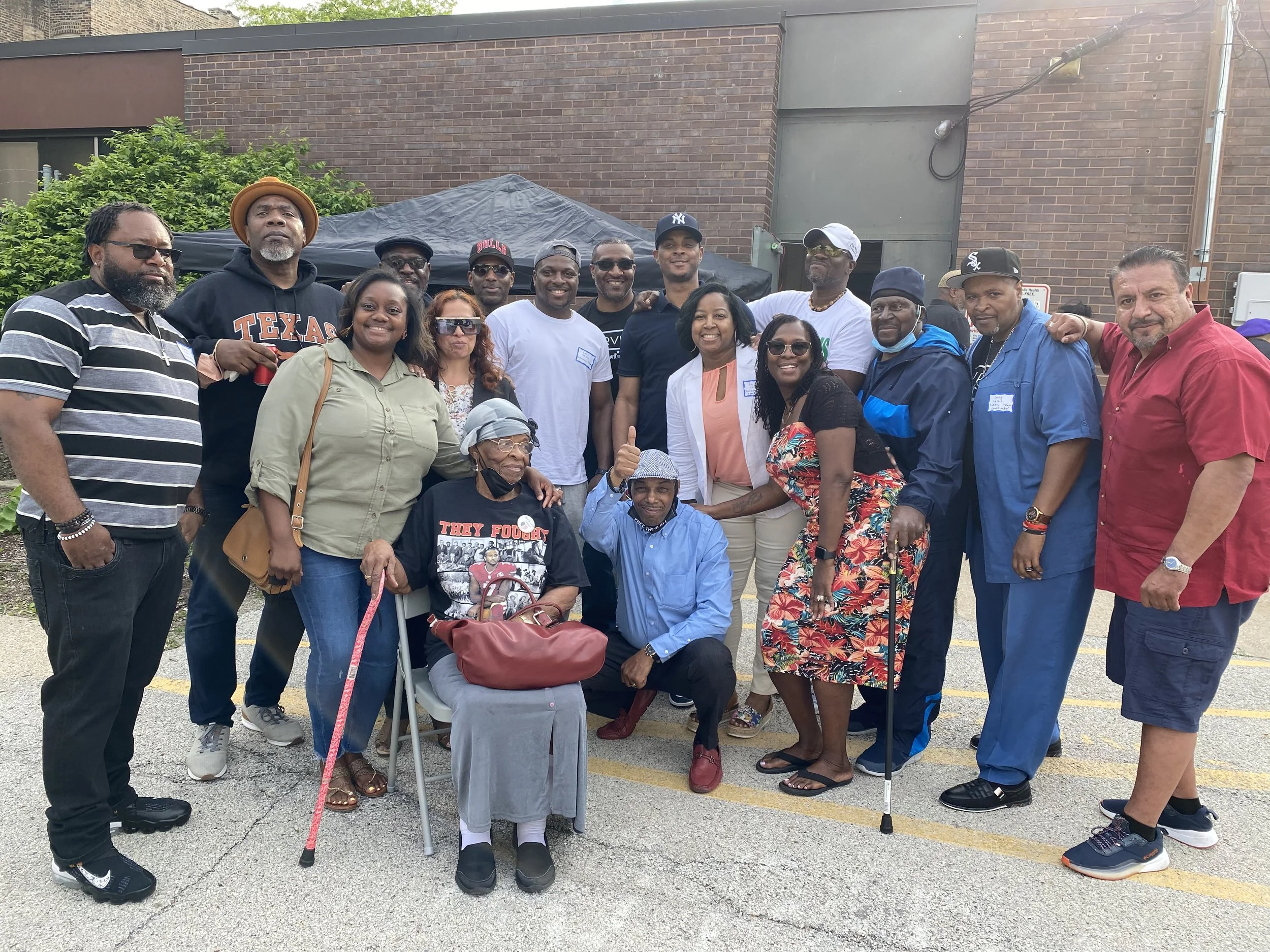
By: Mark Clements, CTJC, SR. Organizer
Mary L. Johnson is living proof of a dedicated mother, someone who has always refused to remain silent. Many would have been left behind if it was not for her voice, her activist abilities and her love for exposing injustice—not just for her son, but for many other people. Mary connected with families, and especially mothers, empowering them to stand up and to fight back! Some ignored her, but Mary kept going and to this day she still is working to expose the injustice of systems that others have made livings from upholding.
The historical landscape of municipal policing in late twentieth-century Chicago was defined by systemic extrajudicial violence, institutional cover-ups, and decades-long struggles for constitutional accountability. At the center of this history was former Chicago Police Department (CPD) Commander Jon Burge and a cohort of officers under his command—frequently referred to as the "Midnight Crew"—who systematically tortured over 100 African American men between 1972 and 1991 to extract coerced confessions. While this apparatus of state-sanctioned coercion operated with near-total administrative impunity across Area 2 and Area 3 police headquarters, it met sustained resistance from the families of those targeted.
Mary L. Johnson stands as a pioneering figure in this grassroots anti-torture movement. As the mother of Michael Johnson—a survivor of police torture who was subsequently funneled into life imprisonment—Mary L. Johnson was among the very first community members to file formal complaints against Jon Burge in the late 1970s and early 1980s. Her decades-long crusade helped expose the systemic nature of police violence in Chicago, catalyzed local and international human rights campaigns, and laid the foundation for the historic 2015 Chicago Police Torture Reparations Ordinance.
Historical Roots of Systemic Police Violence in Chicago
The structural foundations of police torture in Chicago were sustained by racialized criminalization and an absence of judicial oversight. Following military service in the Vietnam War, Jon Burge joined the Chicago Police Department and was promoted to detective in 1972, assigned to Area 2 headquarters on the city's South Side. Drawing on interrogation tactics that mirrored military interrogation methods, Burge and his subordinates developed a standardized repertoire of physical and psychological abuse designed to secure station house confessions while minimizing visible physical trauma.
These coercion techniques included electroshock interrogations administered through a hand-cranked generator (known internally as the "black box") or cattle prods, asphyxiation via rubber typewriter covers or plastic bags, mock executions with firearms, and severe physical beatings. The administrative and judicial response to these practices perpetuated their use. Prosecutors in the Cook County State's Attorney's Office routinely introduced coerced statements into evidence, while judges systematically dismissed allegations of torture as uncorroborated fabrications. This institutional protection allowed Burge to advance through the ranks, attaining promotion to sergeant in 1977, lieutenant in 1980, and ultimately commander of the Area 3 Violent Crimes Unit.
The Criminalization and Carceral Trajectory of Michael Johnson
The life trajectory of Michael Johnson exemplifies how young Black men in Chicago were repeatedly targeted, physically abused, and processed through the carceral system. Michael Johnson's initial contact with law enforcement occurred in 1970 at age 16, when Chicago police officers confronted him and his peers in a local park. While his companions fled, Johnson remained, believing his innocence would protect him; officers physically assaulted him and took him into custody, releasing him only after confirming his juvenile status. Observing her son's injuries, Mary L. Johnson filed an official police misconduct complaint—an action that initiated a pattern of law enforcement retaliation.
Upon reaching age 17 and entering adult legal jurisdiction, Johnson was subjected to intense surveillance and repeated stops. Over the next six months, officers arrested Johnson 17 times for minor infractions like loitering, charged him with carrying a deadly weapon for wearing a pin in his hat, and pistol-whipped him in an encounter that required 13 stitches. This sustained pressure funneled Johnson into the justice system: charged in a shooting incident despite working as a hotel porter at the time, he eventually accepted a plea bargain on defense counsel advice. Following his release at age 19, disenfranchised and branded with a record, he engaged in gang activity and narcotics, ultimately serving six years for robbing a drug house.
On June 9, 1982, Michael Johnson came into direct contact with Lt. Jon Burge at Area 2 headquarters, where he was subjected to physical assaults and electroshock torture. Mary L. Johnson promptly filed formal complaints with the CPD Office of Professional Standards and the FBI. Following these filings, Burge explicitly threatened revenge. Shortly thereafter, Johnson was arrested and charged with the kidnapping and murder of a local drug dealer. The prosecution built its case on incentivized co-defendant testimony and attempted witness coercion, while officers tried to force Johnson to confess by threatening to charge his mother as an accomplice. Despite no physical evidence linking him to the crime, Johnson was convicted and sentenced to 35 years.
While serving this term, Johnson was indicted in 1987 for allegedly ordering a prison hit resulting in the death of Pontiac Correctional Center Superintendent Robert Taylor. Maintaining absolute innocence, Johnson rejected four plea bargain offers reducing the penalty to 10–15 years, stating he would not plead guilty for even "15 minutes" to a crime he did not commit. He was convicted and sentenced to life imprisonment without the possibility of parole.
Extreme Solitary Confinement at Tamms Supermax
Prior to his supermax transfer, Johnson was housed at Menard Correctional Center, where he completed college courses and served as president of the Afrikan American Culture Coalition. However, on March 31, 1998, correctional officers forcibly removed Johnson from his cell and transferred him to the newly opened Tamms Correctional Center in southern Illinois. Tamms was designed specifically for total sensory deprivation and indefinite human isolation.
In a booklet published by Mary L. Johnson in 1998, Michael Johnson documented the psychological torture embedded in Tamms' operating protocols. Inmates were confined for 23 to 24 hours daily inside 7-by-12-foot concrete cells with solid steel doors and narrow tray slots, eliminating visual contact with hallways or peers. Every exit from the cell required the "Tamms curtsy"—a strict physical control ritual involving forced kneeling, heavy shackling, and invasive strip searches. Privileges were restricted: telephone calls, communal dining, educational programs, and group religious services were prohibited, while property was limited to a few approved magazines, family photos, and flexible plastic pen inserts. Visitation required driving to a remote facility where non-contact visits occurred behind thick glass partition walls via internal intercoms, prohibiting physical contact like hugging loved ones.
Johnson remained in solitary confinement at Tamms for over a decade without clear administrative criteria for earning a transfer back to general population. This indefinite confinement motivated Mary L. Johnson to join the "Tamms Year Ten" campaign alongside organizer Laurie Jo Reynolds, pushing for reform and the ultimate closure of the supermax facility. Mary Johnson maintained a complex view of her son's confinement: while she denounced Tamms' conditions as state-sanctioned cruelty that prevented her from ever touching her son, she simultaneously expressed concern that placing Michael in general population would leave him vulnerable to being framed by prison staff, as she believed had occurred in the Pontiac Superintendent case.
Mary L. Johnson and the Mobilization of Maternal Resistance
Mary L. Johnson's activism highlights the role of Black mothers in exposing state violence and building grassroots human rights organizations. When Johnson filed her initial complaints against Jon Burge in the 1970s and 1980s, she faced institutional hostility and social isolation. Of the 46 family members who initially filed complaints alongside her, almost all withdrew them due to police intimidation. Johnson, however, maintained her claims and spearheaded grassroots organizing.
Over four decades, Johnson helped build activist infrastructure. As a core member of Citizens Alert, she advocated for police oversight, while her work with the Illinois Coalition to Abolish the Death Penalty (ICADP) involved organizing monthly bus visits to death row facilities at Pontiac and Menard. She sustained these monthly death row visits even though her own son was serving life without parole rather than a capital sentence. In the late 1990s and 2000s, Johnson joined the Campaign to Prosecute Police Torture alongside human rights attorneys from the People's Law Office, demanding criminal indictments against Burge and his officers.
Together with other mothers of torture survivors—including Bertha Escamilla, Armanda Shackelford, and Alice Kim—Johnson formed the "Mothers of the Movement". This network provided emotional support while humanizing incarcerated survivors to counter institutional narratives that depicted them solely as violent criminals. Johnson also contributed to public art and educational initiatives, participating in the Invisible Institute's Chicago Police Torture Archive and collaborating with artist Dorothy Burge on exhibitions like Makes Me Wanna Holla at the University of Chicago's Logan Center for the Arts.
The Historic 2015 Reparations Ordinance and Ongoing Legal Battles
Decades of organizing by survivors, family members, and legal advocates culminated in municipal legislation. On May 6, 2015, the Chicago City Council unanimously passed the Burge Reparations Ordinance, making Chicago the first municipal government in the United States to provide reparations for systemic police torture.
Drafted by Chicago Torture Justice Memorials (CTJM) in collaboration with the People's Law Office, the $5.5 million reparations package established a comprehensive framework for municipal redress. The legislation created a financial compensation fund for validated survivors, mandated a Chicago Public Schools history curriculum covering the Burge torture cases for 8th and 10th graders, established the Chicago Torture Justice Center on the South Side to deliver specialized trauma counseling, provided tuition-free education at City Colleges of Chicago, issued a formal municipal apology, and committed to constructing a public memorial.
Despite its historical significance, legal advocates noted structural limitations. Financial remedies were restricted to individuals tortured within Area 2 or Area 3 during Jon Burge's specific tenure, excluding victims tortured in other police districts. Furthermore, municipal reparations lacked the judicial authority to vacate wrongful convictions or release incarcerated survivors. For Mary L. Johnson, whose son remained incarcerated under a life sentence, the ordinance represented a historic victory that nevertheless highlighted the boundaries of municipal reform.
To address ongoing incarcerations, advocates mobilized support for the Illinois Torture Inquiry and Relief Commission (TIRC) Act. Established to investigate claims of police torture and refer credible cases back to the courts for evidentiary hearings, TIRC became a primary legal pathway for survivors seeking post-conviction relief. Michael Johnson's case was formally submitted to TIRC for review, joining petitions asserting that coerced statements, witness intimidation, and police misconduct had corrupted original proceedings.
Analytical Conclusions and Institutional Outlook
The advocacy of Mary L. Johnson and the carceral history of Michael Johnson provide vital insights into the dynamics of police violence, institutional resistance, and grassroots organizing.
First, Mary L. Johnson’s four-decade campaign demonstrates the impact of maternal resistance against state violence. By refusing to withdraw her initial complaints despite police intimidation, Johnson established an early record of police torture when official channels actively suppressed allegations. Her work across Citizens Alert, ICADP death row visits, and the Mothers of the Movement coalition helped sustain public attention, eventually compelling municipal and state institutions to address police torture.
Second, Michael Johnson’s trajectory illustrates how early police targeting can evolve into lifelong carceral isolation. The sequence extending from retaliatory arrests at age 17 to electroshock interrogation by Jon Burge in 1982, subsequent murder charges based on coerced testimony, and eventual transfer to Tamms Supermax demonstrates how local police practices and state prison administration functioned as an interconnected system.
Finally, while the 2015 Reparations Ordinance established a national precedent for municipal redress, accountability remains incomplete. Jon Burge was never criminally prosecuted for torture due to statutes of limitations, serving prison time only after a 2010 conviction for perjury and obstruction of justice. Moreover, several survivors whose convictions relied on coerced evidence remain incarcerated. Consequently, the ongoing legal efforts through the Illinois Torture Inquiry and Relief Commission represent the continuing struggle to achieve post-conviction relief and full judicial accountability for survivors and their families.
Today 90+ year-strong Johnson struggles to gain relief for her son.
